
Blueprint Printing Sizes & Costs for Farmington Valley Contractors

The cost of printing blueprints depends on five things: sheet size, number of sheets, black-and-white versus color, paper type, and how fast you need them. A single 24x36 black-and-white sheet is a very different job from a 40-page color plan set due tomorrow morning.
If you're a contractor bidding a job in Avon, an architect sending plans to the Simsbury building department, or a homeowner getting ready for a kitchen remodel in Canton, this guide is for you. We'll walk through:
- The standard blueprint sizes and when each one is used
- What actually drives the price of a blueprint order
- How to set up your files so they print right the first time
- How to get a fast, accurate quote from a local print shop
What Size Are Blueprints?

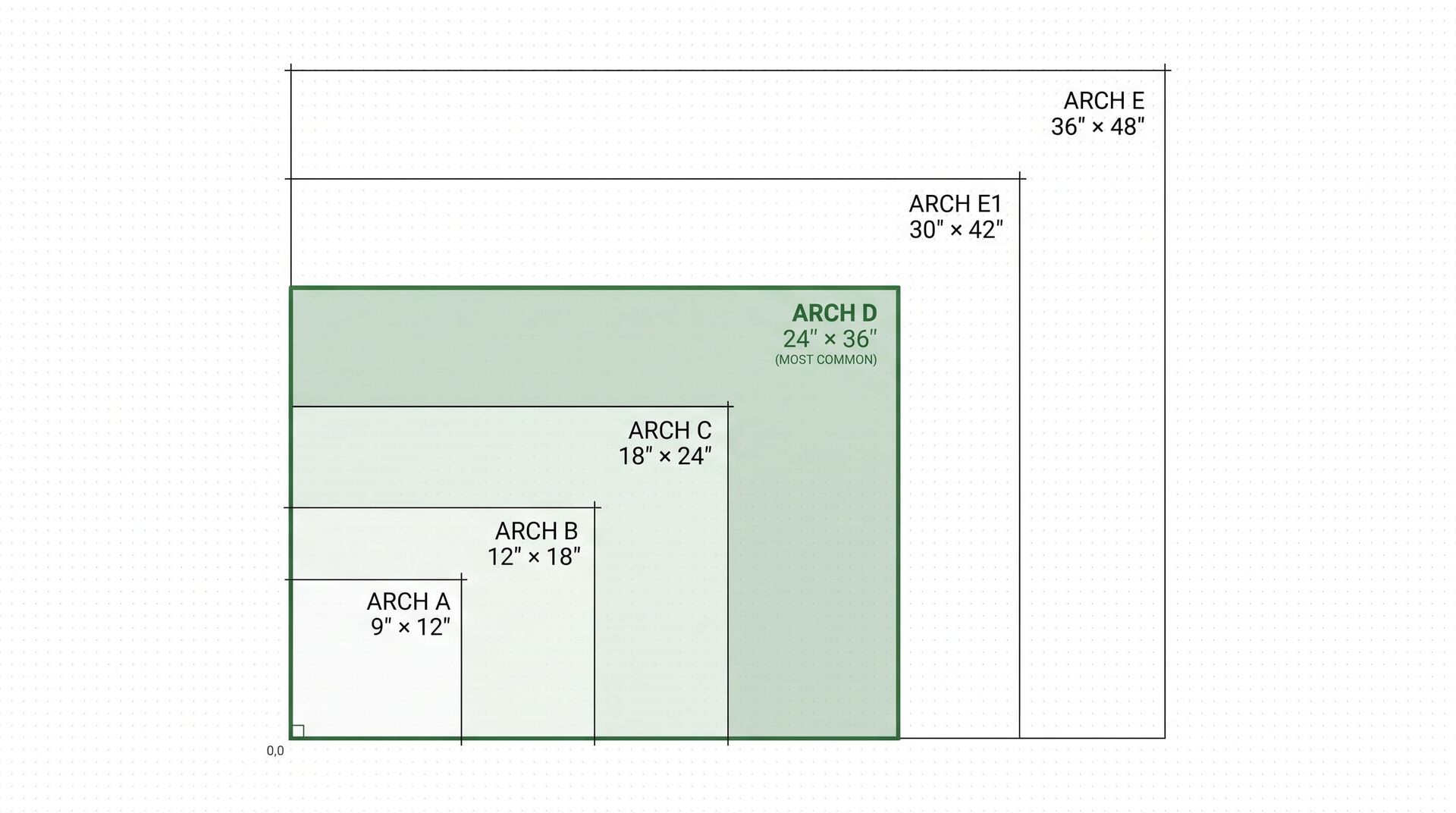
The most common blueprint size in the U.S. is 24x36 inches, known as ARCH D. Most residential and light commercial plan sets in the Farmington Valley are drawn at this size. Larger projects often use 30x42 or 36x48, while smaller sheets like 18x24 work well for simple site plans and additions.
There are two main sizing systems: architectural (ARCH) sizes used by architects and builders, and engineering (ANSI) sizes used by engineers and surveyors.
Architectural (ARCH) Sizes
| Size name | Dimensions (inches) | Common uses |
|---|---|---|
| ARCH A | 9 x 12 | Details, small sketches |
| ARCH B | 12 x 18 | Reduced sets, field reference |
| ARCH C | 18 x 24 | Small additions, decks, simple site plans |
| ARCH D | 24 x 36 | Most residential and light commercial plans |
| ARCH E1 | 30 x 42 | Larger commercial and municipal projects |
| ARCH E | 36 x 48 | Large commercial projects, detailed site plans |
Engineering (ANSI) Sizes
| Size name | Dimensions (inches) | Common uses |
|---|---|---|
| ANSI A | 8.5 x 11 | Specs, schedules, letter-size details |
| ANSI B | 11 x 17 | Half-size sets, tabloid reference copies |
| ANSI C | 17 x 22 | Mechanical and electrical drawings |
| ANSI D | 22 x 34 | Engineering and civil drawings |
| ANSI E | 34 x 44 | Large civil and survey drawings |
| ARCH E | 36 x 48 | Large commercial projects, detailed site plans |
Should I Print Full-Size or Half-Size Sets?
Print full-size sets for anything that will be measured, submitted, or built from. Half-size sets (often 11x17 or 12x18) are great for quick reference in the truck or at a client meeting, and they cost less to print.
One caution: shrinking a drawing changes its scale. A plan drawn at 1/4" = 1' becomes 1/8" = 1' at half size. Mark reduced sets clearly as "half scale" or "not to scale" so no one on site measures off the wrong sheet.
How Much Does It Cost to Print Blueprints?
Blueprint printing is usually priced per sheet, and the price changes with size, ink coverage, paper, and quantity. Black-and-white line drawings on standard bond paper are the most affordable option. Full-color sheets, heavy ink coverage, and specialty paper cost more.
Because every plan set is different, the most reliable way to know your cost is a quick custom quote.
Request a blueprint printing quote from Trailhead
1. Sheet Size
Larger sheets use more paper and ink, so a 36x48 sheet costs more than a 24x36 sheet. If your drawings were set up at an unusual size, ask whether a standard size will work just as well.
2. Number of Sheets and Sets
A plan set might be 4 sheets or 60. Many shops price larger quantities more favorably, so printing all the sets you need at once (owner, contractor, subs, building department) is often more cost-effective than coming back for more.
3. Black-and-White vs. Color
Most construction drawings print in black and white, which keeps costs down. Color makes sense for:
- Site plans with color-coded zones, wetlands, or setbacks
- Architectural renderings for clients or planning boards
- Presentation boards for town meetings or open houses
4. Paper Type
Standard bond paper is the everyday choice for job-site plans. Heavier or coated stock is better for color renderings and anything that will be displayed or handled often.
5. Turnaround Time
Rush jobs may affect scheduling and cost. If you have a permit submission or bid deadline coming up, let your print shop know the date up front so they can plan around it.
Are "Blueprints" Still Actually Blue?
No. True blueprints were made with a chemical process that produced white lines on a blue background. Today, almost all "blueprints" are printed digitally on wide-format printers, usually as black lines on white paper. The name stuck even though the blue didn't.
How Do I Prepare Blueprint Files for Printing?

Send a PDF with each page set to the exact sheet size you want printed. A properly set up PDF prints at true scale, keeps your line weights crisp, and avoids delays.
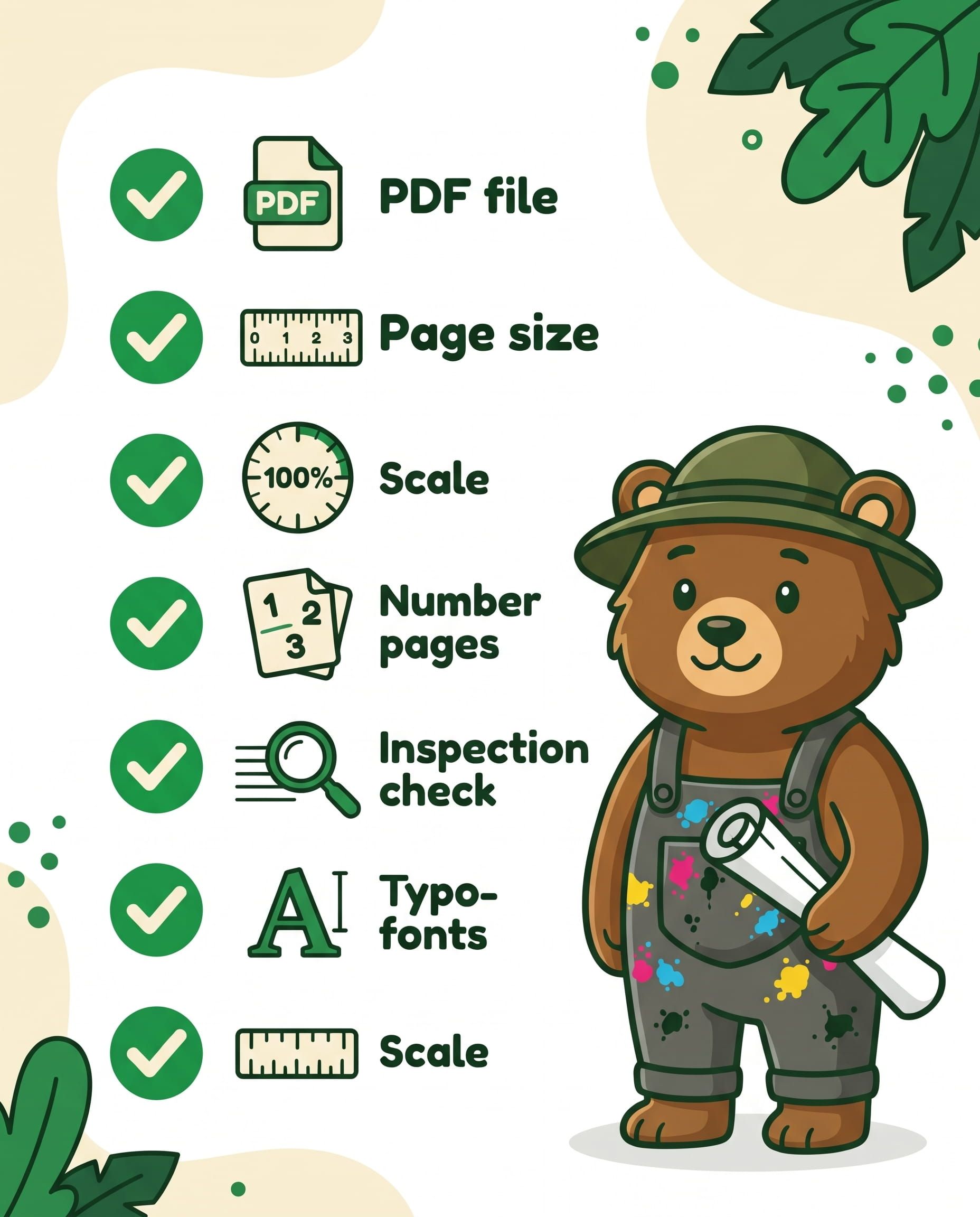
Use this checklist before you send files:
- Export to PDF.
Ask your print shop before sending native CAD files.
- Match the page size to the print size. A sheet meant to print at 24x36 should be a 24x36 PDF page, not a letter-size page.
- Print at 100% scale. Don't use "fit to page" when exporting, or your scale will be off.
- Combine sheets in order.
One multi-page PDF in sheet order (A1, A2, S1, etc.) is easier to proof and print than dozens of loose files.
- Check line weights. Very thin lines can disappear when printed. Zoom in on your PDF before sending.
- Flatten or embed fonts.
This keeps notes and dimensions from shifting or swapping fonts.
- Include a scale bar. It lets anyone check the scale on a printed sheet, even if a copy gets reduced later.
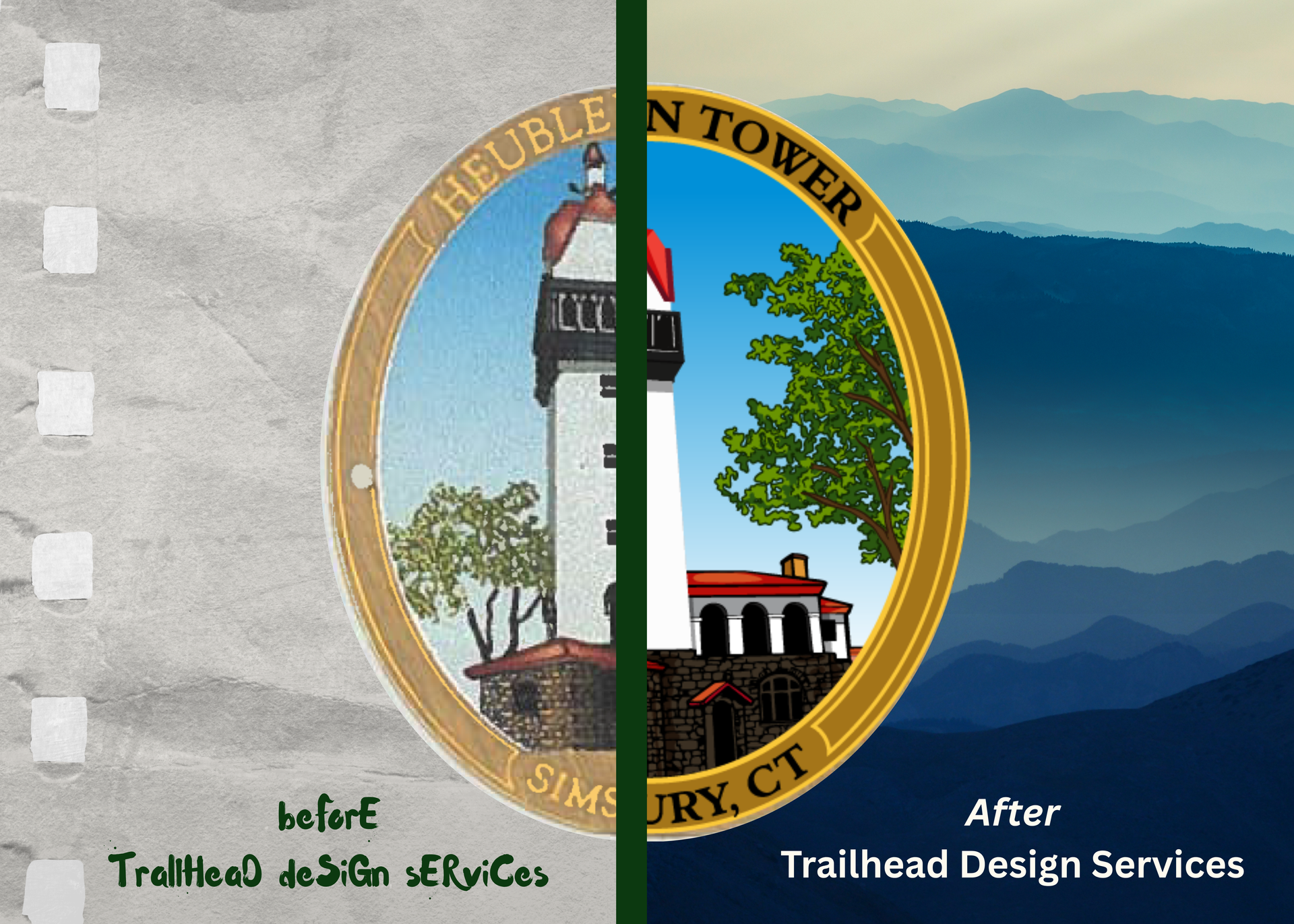
Need help cleaning up an old scan or a file that isn't print-ready?
Trailhead Printing design services
Who Uses Blueprint Printing in the Farmington Valley?

Blueprint printing isn't just for big construction firms. In Simsbury and surrounding towns, we see plans come through from:
- General contractors and builders printing sets for crews, subs, and inspectors
- Architects and designers preparing permit and client review sets
- Engineers and surveyors printing site plans and civil drawings
- Homeowners printing plans for additions, decks, or renovations
- Municipalities, schools, and nonprofits printing facility plans and project documents
If you manage job-site paperwork, you may also find our guide to custom NCR forms helpful.
Why Farmington Valley Contractors Still Rely on Custom NCR Forms
Why Use a Local Print Shop for Blueprints?
A local print shop gives you direct communication, a real person to check your files, and quick pickup close to your job sites. That matters when a drawing changes the night before a meeting or an inspector needs a fresh set.
Working with Trailhead Printing in Simsbury means:
- Someone looks at your files. If a page is set up at the wrong size or scale, we'll flag it before it prints.
- Clear answers. You can call, email, or stop by and talk to the people printing your job.
- Close to your projects. We're on Hopmeadow Street in Simsbury, easy to reach from Avon, Canton, Granby, Farmington, Bloomfield, and West Hartford.
- Local delivery may be available for qualifying projects. Ask us about delivery to your office or job site.
- One shop for the rest of the job. Many contractors also need yard signs, job-site signage, NCR forms, and branded apparel for crews.
Curious how local printing compares to the big chains? Why a Local Print Partner Outperforms Big-Box Stores Every Time
Get Your Blueprints Printed Right the First Time
To recap: most plans print at 24x36 (ARCH D), half-size sets are handy for reference but change the scale, and your cost comes down to size, quantity, color, paper, and turnaround. A clean, correctly sized PDF is the single best way to get accurate prints without delays.
When you're ready, send your plan set to Trailhead Printing for a custom quote. Tell us the sheet size, how many sets you need, black-and-white or color, and your deadline, and we'll take it from there.
Get your blueprint quote today:
email
sales@trailheadprinting.com, call
(860) 248-6113, or stop by 1193 Hopmeadow St in Simsbury.
Frequently Asked questions
What is the standard size for blueprints?
The standard blueprint size in the U.S. is 24x36 inches, called ARCH D. It's used for most residential and light commercial plan sets. Larger projects often use 30x42 or 36x48 inches.
How much does it cost to print blueprints?
Blueprint printing is usually priced per sheet, based on size, quantity, black-and-white or color, paper type, and turnaround time. Black-and-white sheets on standard bond paper are the most affordable. For an exact price, send your plan set to Trailhead Printing in Simsbury for a custom quote.
What file format is best for printing blueprints?
A PDF is the best format for printing blueprints. Set each page to the exact sheet size you want printed and export at 100% scale, not "fit to page." This keeps your drawings at true scale and your lines sharp.
Can I print blueprints smaller than full size?
Yes, many contractors print half-size sets on 11x17 or 12x18 paper for quick reference. Reducing a drawing changes its scale, so a 1/4" = 1' plan becomes 1/8" = 1' at half size. Label reduced sets clearly so no one measures from them by mistake.
Where can I get blueprints printed near Simsbury, CT?
Trailhead Printing at 1193 Hopmeadow St in Simsbury prints blueprints and construction documents for contractors, architects, and homeowners across the Farmington Valley. Contact the shop at (860) 248-6113 or sales@trailheadprinting.com for a quote. Local delivery may be available for qualifying projects.
Let’s Build Something Beautiful.
Whether you are a small business here in Simsbury looking for a brand refresh, or an event organizer needing eye-catching promotional materials, Trailhead Printing is now your one-stop shop from concept to completion.
Don't let a blurry logo hold your business back. Stop by the shop or reach out to us today to learn how our new Design Services can help your brand look its absolute best!
Recent Posts